Showing posts with label Travel World. Show all posts

Wednesday, July 11, 2018

Lima, Peru

I was in Lima for a few days at the end of June, as the last leg of my Easter Island + Peru trip. I spent the time entirely on foot, mostly around the Plaza Mayor, which has the cathedral and presidential residence.

Here’s a shot of the Plaza Mayor with the presidential residence in the background. I think the fountain is the oldest thing in the square, from 1651. The World Cup was in progress the entire time I was travelling, and the second shot is folks watching the World Cup in the Plaza.


Here’s the main facade outside, and the altar + choir inside, the Cathedral. I don’t remember ever seeing a church’s altar inside the choir, so that was interesting.


Francisco Pizarro, the Spaniard who conquered the Incas and founded Lima, is inside the cathedral. The pics are his casket and one of a series of posters giving (I think) the evidence that the body is indeed Pizarro's.


Street performers on the Jiron de la Union, a pedestrian street leading to the Plaza.

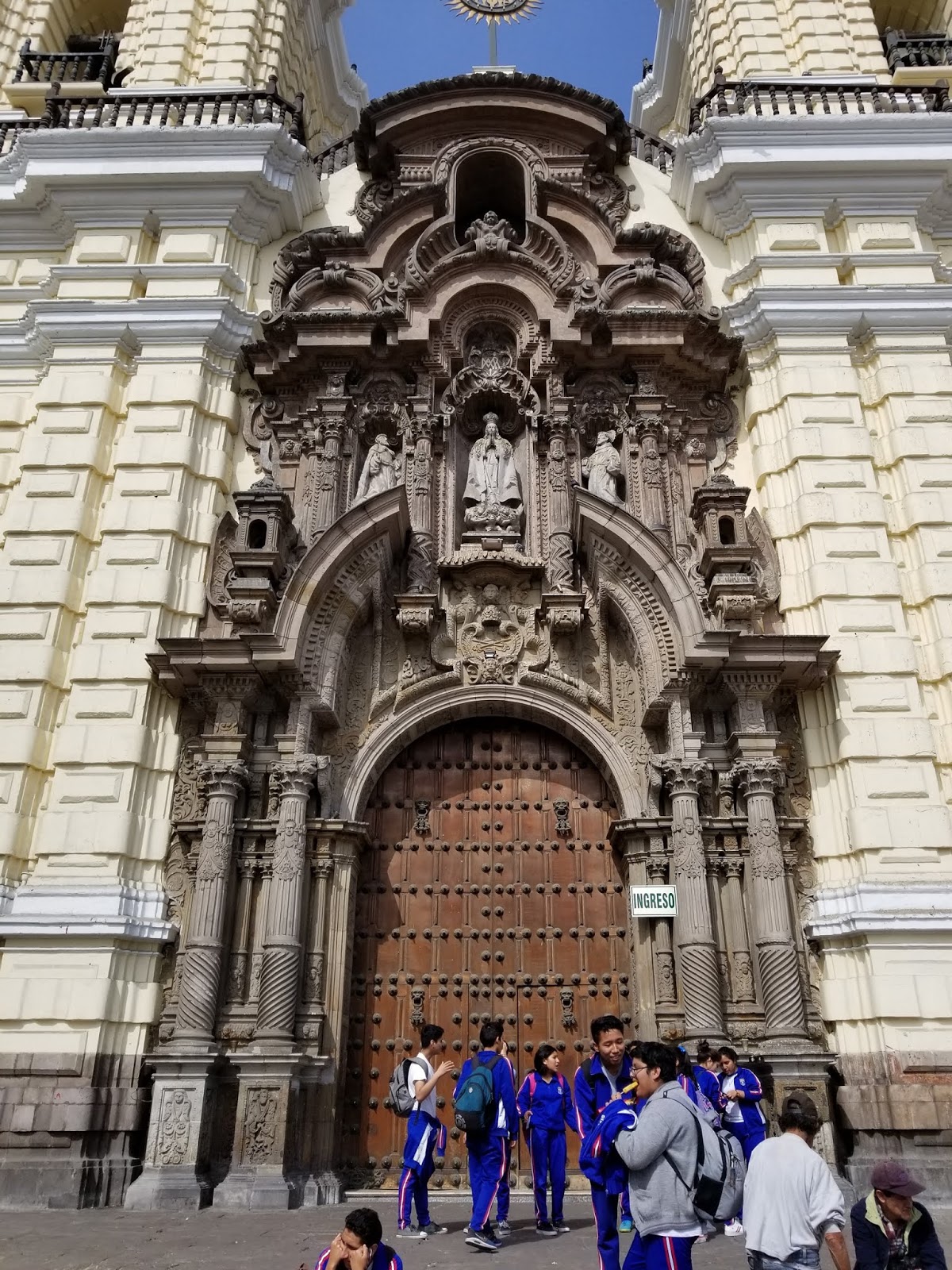
The San Francisco church, which also includes a convent and catacombs with some old skeletons, is a few blocks from the Plaza When I arrived the place seemed closed, but they opened it (?) for this little girl banging on the giant iron clanger. The crush inside was around the patron saint of impossible causes.


The Museo de Arte de Lima is a little farther afield - it’s in the Exhibition Palace built for the Lima International Exhibition of 1872.

It had a lot of interesting things I hadn’t seen before, like this depiction of the trinity as three identical characters.


A second art museum, the Museo Central, is in the old Central Reserve Bank building. Some of the exhibits were in the old teller stations and basement vault.


Sunday, July 08, 2018

Peru's Inca Heartland

I was in the Inca heartland of Peru for a week in June - Cusco, the Sacred Valley, and Machu Piccu.

I visited the town square in Cusco on June 24, by chance they day of a massive festival celebrating the winter solstice.


Tambomachay, an Inca water temple near Cusco.

Moray, thought to be an Inca “crop lab” with concentric terraces that have e.g. very different temperatures.


Ollantaytambo, an Incan royal estate and stronghold in the Sacred Valley.


Last, Machu Piccu is of course the star of the show.


Thursday, July 05, 2018

Easter Island

I was on Easter Island (and then Peru) for a few days in June.

Easter Island (Rapa Nui) is just a speck in the Pacific, 14 miles wide, and it’s 2,200 miles from mainland Chile, making it the most remote place on Earth. The island is volcanic, and the landscape is extinct volcanoes and craters. The population is about 7,800 people, mostly in the island's one town, Hanga Roa.

The island is famous for its hundreds of giant head statues, moai, which represent or contain spiritual power of the Rapa Nui people’s ancestors. The moai were carved from about 1100 to 1680 AD.


Almost all of the statues are made from soft stone from one quarry on the side of the Rano Raraku crater. There are still many statues at the quarry, incomplete or never delivered to their final destination. Those quarry heads were my favorites.


Late in the island's history, a strange "bird man" cult replaced the ancestor religion on the island. Each year champions (hopu) would compete to "collect the first sooty tern egg of the season from the islet of Motu Nui, swim back to Rapa Nui [the main island] and climb the sea cliff of Rano Kau to the clifftop village of Orongo." (Wikipedia.) The sponsor of the winning champion would become the island’s leader for the year. "The race was very dangerous and many hopu were killed by sharks, by drowning, or by falling from cliff faces..."

My pics are Motu Nui, the Rano Kau volcano, the Orongo village, and a bird man petroglyph. To parse the petroglyph, compare it to the diagrams here.


Animals - horses, cows, dogs, cats, chickens - pretty much roam free on the island. A guide told me it was because the island was so small, there was really no place they could run off to. :) Here are some horses grazing in Hanga Roa’s colorful cemetery.

Last, some views of the Pacific.


Thursday, December 31, 2015

Prague

I visited Europe in October for my intern Samuel’s Ph.D. defense in Vienna, but expanded the visit into a tourist trip of Prague, Vienna, and Venice. I started with a few jet lagged days in Prague, the city of Wenceslas and Kafka, walking around the Old Town Square and Prague Castle.

The most striking building on the Old Town Square is the Church of Our Lady before Tyn, with its Disneyesque spires. The present building goes back to the 14th century, and I was surprised to find Tycho Brahe's grave inside.

The Old Town Hall across the square is famous for its Astronomical Clock, which keeps time in like 4 different medieval time systems. A big crowd gathers to watch the clock’s animatronic figures, including Death and the Apostle, mark each hour.

The Hussite movement resisting the Catholic church predated the Reformation and was based in Prague. The square includes a monument to Hussite leader Jan Hus.

Crossing the Charles Bridge from the Old Town takes you to Prague Castle, which contains the St. Vitus cathedral, St. Vitus treasury, and the palace. St. Vitus cathedral includes the tomb of St. Wenceslas, the patron saint of the Czech republic, while the St. Vitus treasury includes reliquaries of St. Nicholas and other saints. The cathedral was busy, but I had the treasury to myself when I visited. My picture shows the tomb of St. Wenceslas in St. Vitus.

Prague has works by the Art Nouveau master Alphonse Mucha, including a stained glass window in St. Vitus, which stands out in the medieval building. I also saw Mucha’s masterwork, the Slav Epic, at the National Gallery’s Trade Fair Palace.

Vienna

Vienna was the center of the Hapsburg empire, which ruled much of central Europe from the middle ages through WWI, and was the center of the classical music world, with many of the great composers working there.

The Hofburg was the Hapsburg palace complex. The most striking part of the complex is the front colonnade, which was only completed as the Hapsburg’s long history was ending with WWI.


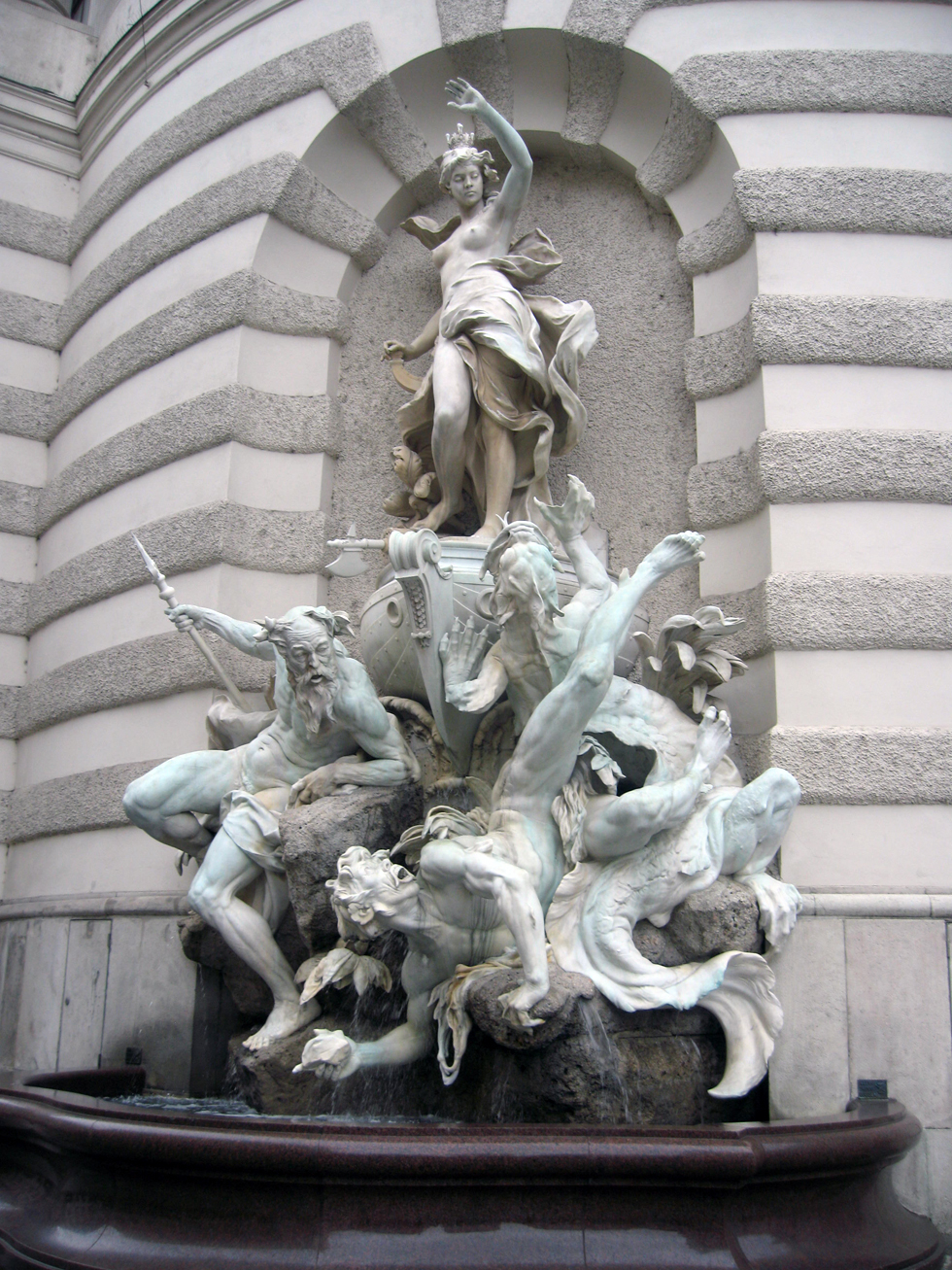
The Michaelplatz is the older grand entrance, and opens onto a posh shopping district. I loved the heroic statues there.


I also visited the Hapsburg crypt nearby, which has an epic collection of royal caskets. Most had a common style - elaborate, often morbid decorations in industrial-looking iron - which made the crypt awesomely creepy.

The Stephansdom cathedral is the heart of Vienna.

The Karlskirche is the city's "most outstanding baroque church." The ceiling fresco was being restored when I visited, so I was able to take an elevator up to see the fresco up close, and to see Vienna from the church’s steeple.


I also got to enjoy some of Vienna’s music and art. I saw the Merry Widow at the Volksoper, Verdi’s MacBeth at the Staatsoper, and the apartment where Mozart lived while he wrote the Magic Flute, which is a just a few blocks from the Stephansdom. The Belvedere museum had Klimt’s paintings, including The Kiss, the natural history museum had the prehistoric Venus of Willendorf. My picture is the Staatsoper.

Last but not least, I also got to see Samuel’s thesis defense - congratulations Dr. de Sousa!